

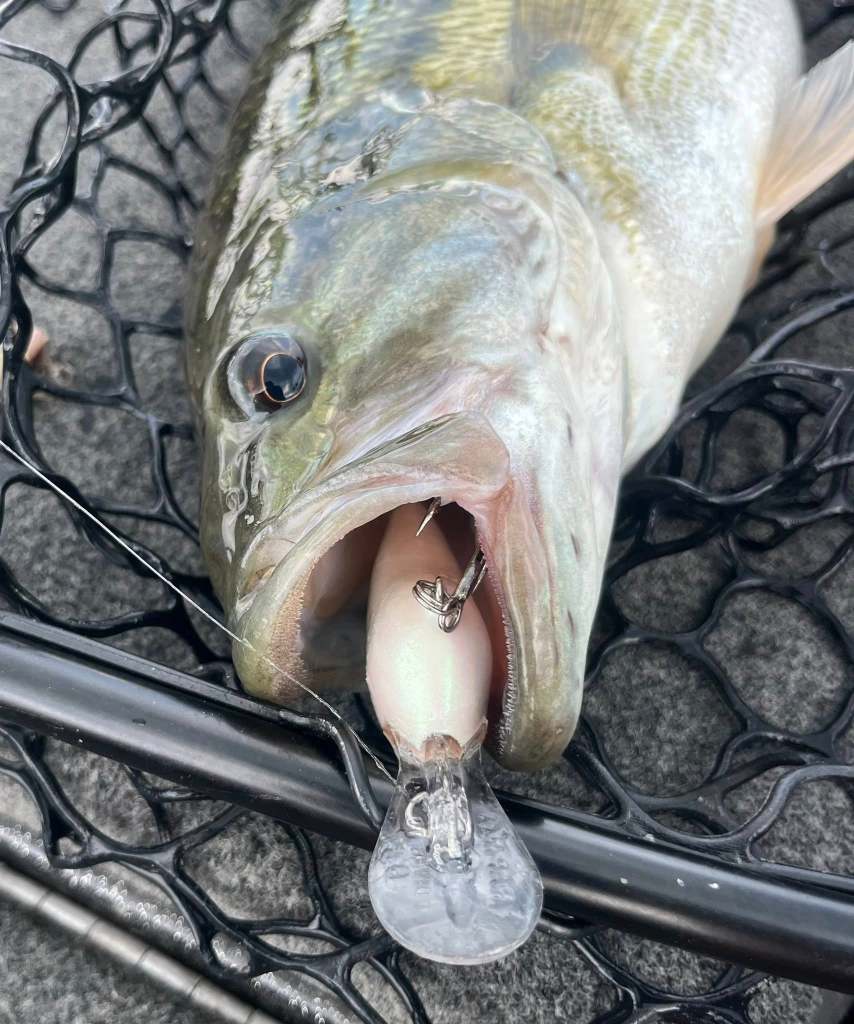
I’ll bet you’re wondering about that catchy title, but that’s about what it boiled down to this week. I did incorporate more Livescope to locate fish, mainly when using the crankbait, and I found it to be pretty amazing watching the fish react to the crankbait as it got close to them. Earlier this week, I was watching my crankbait swim along using Livescope, and as the crankbait swam along, fish started coming up off the bottom, one right after another, in a straight line towards the crankbait. It was almost like watching a hatching of termites as they all leave the ground nest; the fish were appearing from the same little area on the bottom and swimming up to check out the crankbait. Inevitably, as the group of bass spectators gathered around the crankbait, one from the group would break camp, as if to say, “I’m your Huckleberry,” and attack the crankbait. I caught a lot of Huckleberries this week, and the crankbait prevailed again as my favorite bait for the week.
Last week I had an old friend in my boat, and we were reminiscing about growing up in the Midwest and fishing farm ponds as a kid. My old friend Greg’s dad used to take him fishing as a kid just like my dad used to take me fishing as a kid. I told Greg that the most important thing I learned from those fishing trips was patience. My dad would have me sitting on the bank of the pond watching our catfish rods and just waiting for a catfish to take the bait. If I got up and wandered around, my dad would reel in the fish, and I would miss out, so I always stayed pretty close to those rods and waited. I learned to be patient on those pond dykes as a kid and it still helps today.
I had Lisa out with me last week and I wanted her to catch a fish or two on the crankbait I’ve been using so I gave her the rod and bait I had been using to catch my crankbait fish. I grabbed another rod and tied the exact same bait on the same leader and main line. Everything we had was exactly the same. We started out beating some rocky bank in the creek that had wind blowing on it, and I knew there would probably be some fish on it. Within a 100 yard stretch I had put 3 solid fish in the boat and Lisa still hadn’t had a sniff. We moved to a different area, and I boated a couple more fish and still nothing for Lisa, so I started trying to figure out the difference in what I was doing and what she was doing. It was obvious that there was a difference after I had a half dozen fish in the boat and Lisa had none. One thing that stood out was her retrieve was much more deliberate and at a quicker pace. Generally, when Lisa and I are using crankbaits, we’re trying to make contact or stay in contact with the bottom as long as possible, but as we get into late spring the shad spawn begins, and the bass start thinking about chasing shad. Crankbaits that are more shallow divers and bare a shad pattern are more successful this time of year and just swimming the crankbait with a slow retrieve just below the surface often triggers a strike. I showed Lisa the slower speed and explained to her that the bait just needed a slow retrieve with the rod tip down. It didn’t take long after Lisa made the adjustment, she started catching more fish and put 3 in the boat shortly afterwards. It just took a little patience with that slower speed to get the fish to react.
The bite had just about everything to do with the speed of the crankbait for me this week but I gotta brag on the gear I used to make it a fun week of cranking. First, Jeff Nail and St Croix hooked me up with a sweet 7’3″ mxf Black Bass spinning rod for helping represent St Croix at a Scheel’s event at Lake Lanier Islands this past winter. I put one of my Shimano Stradic 2500’s on the rod and loaded it with 20lb Cast Co. braid. Casting distance is very important to me and hands down; Cast Co. braid is the best on the market when it comes to casting distance. For my leader I’m using about 8-10 feet of 8lb Seaguar Invizx and tying the two together with my Cast Away knot. My crankbait of choice for the last few weeks has been the Rapala DT-8 in green gizzard shad and it’s been my best percentage bait for a while.

I’ve found a little bit of topwater here and there, but it’s mainly been a “right place right time” event with the topwater. Yesterday I was able to call more fish up to the surface than in previous days so maybe that’s a good sign for days to come with the topwater bite. I did also get on a little tear with a jerkbait earlier in the week but my “cast to catch” percentage was low with that bait so I gravitated back to the DT-8 which yielded a higher percentage.

Closing in on the weeks end, I was down to 2 baits; it was the little chrome Azuma Zdog walking bait for my starting bait and after a cast or two I would go to work with the crankbait. If there was no wind in the area I was fishing, I’d usually go right to the crankbait and forego topwater all together. The Livescope came into play all week as I used it to locate fish and then I’d usually turn the transducer away from the fish after I made my cast. If the fish were up in the water column and there was wind, I would go with the topwater, and if the fish were down in the water column, I would go with the crankbait. After a few topwater casts, whether I caught a fish or not, I’d switch over to the crankbait and start casting around fish. The technique with the crankbait was pretty simple, I could cast the crankbait about 120-130 feet on average and my Livescope is set to 100 feet looking forward, so my cast covers everything inside the Livescope screen on the retrieve. If there’s at least 5-10 fish inside the screen and I run my crankbait through them, more than likely one of those fish is going to chase it down and strike at it. Speed was the most important part and most of the time the DT-8 was only 4-6 feet below the surface on the retrieve and that put it right in the zone over the deeper brush. The retrieve kinda reminds me of the spybait retrieve, once you get locked into the right speed and start catching more fish, you gain more confidence in the process.
Location for throwing the crankbait this week was pretty forgiving and I focused on a lot of brush out on the ends of points and I was just blind casting around points and rocky areas most of the time. A lot of my fish this week came from at least 15 feet of water and the deepest crankbait fish I caught this week was from 32 feet of water. It didn’t really matter to the fish. If the fish was suspended and there was a group, one was probably going to go after it no matter what depth it was. Once again, the key was the speed.
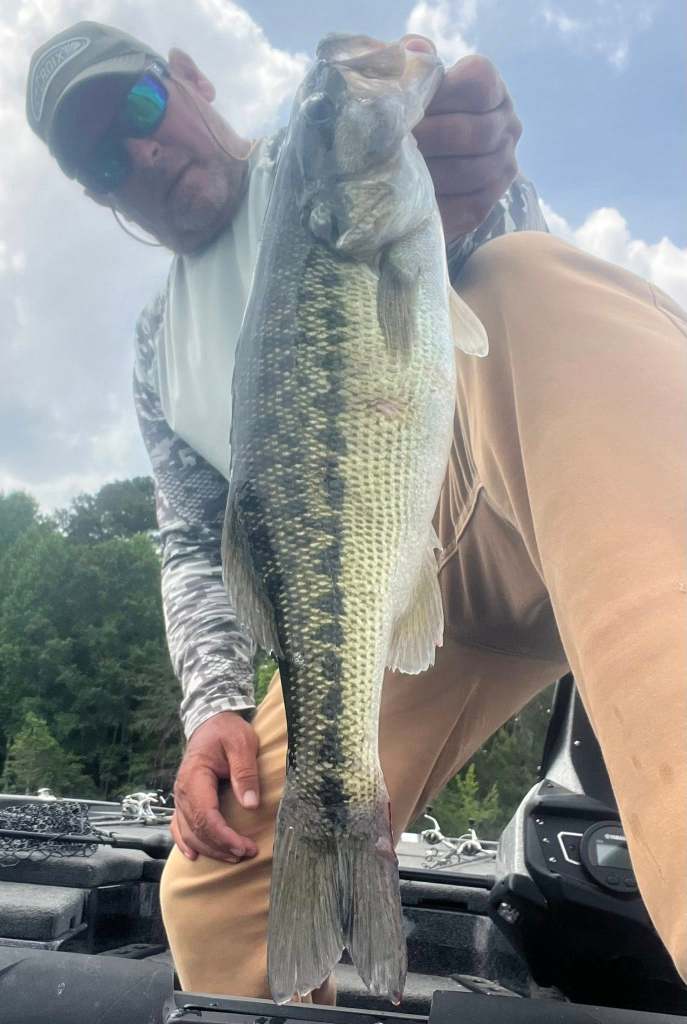
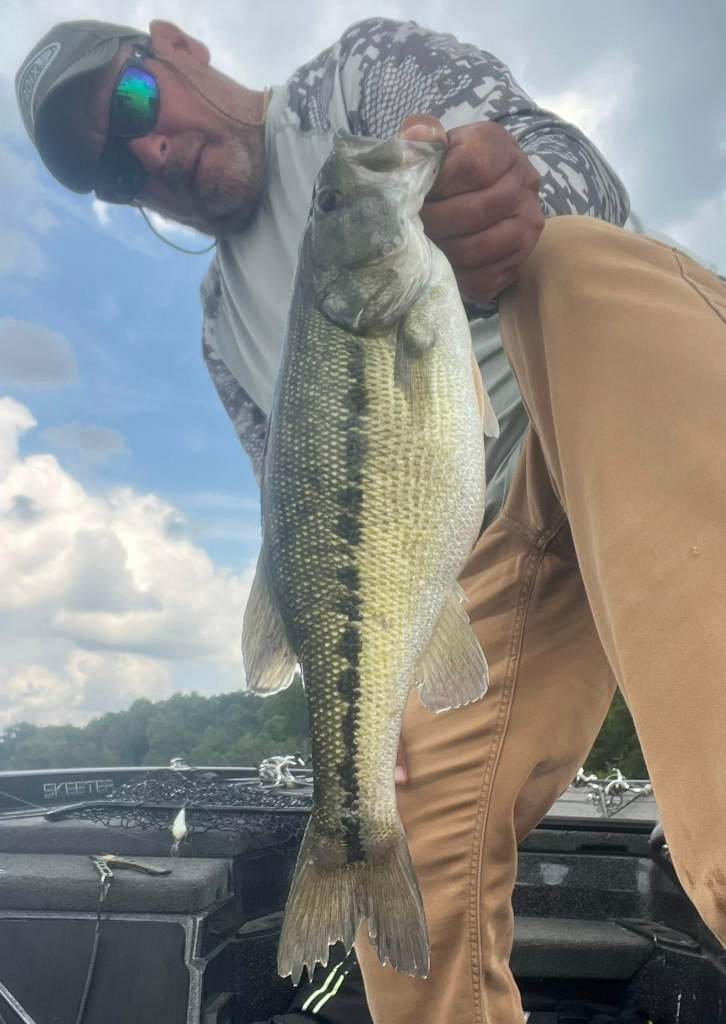
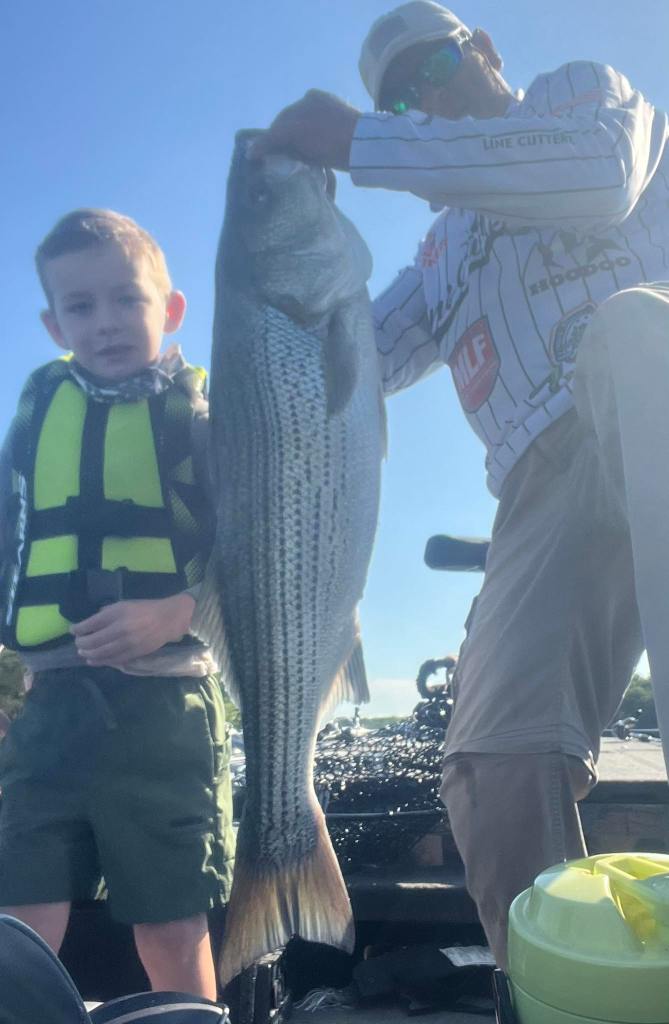
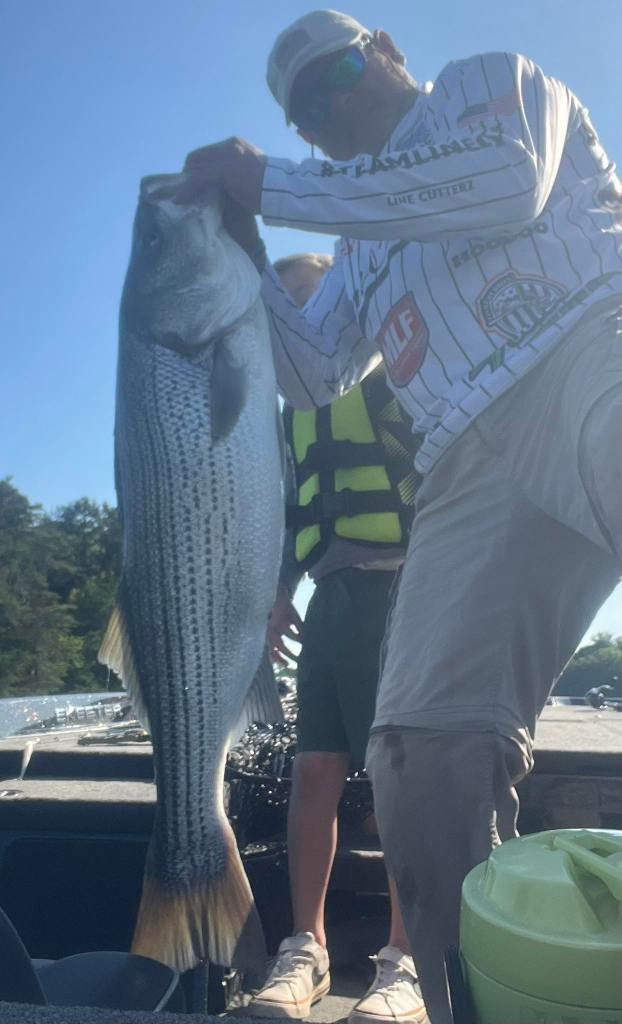
That’s about all I did this week which gave me the best results. The lake is about a foot above full pool and the surface temps are in the mid to low 70’s right now. He’s a few pics from my week.






 Cast Away's Blog
Fun pics! Thanks again for putting these together and hitting “publish.” I have so much to learn before we move to bigger water… these are very helpful. My Dad and I got a slip locked in at a marina on Bull Shoals. I know it’s not the exact same kind of water but I feel like some of the tips you share can be applied. That’s the hope. Tight lines & happy Memorial Day weekend.